Introduction
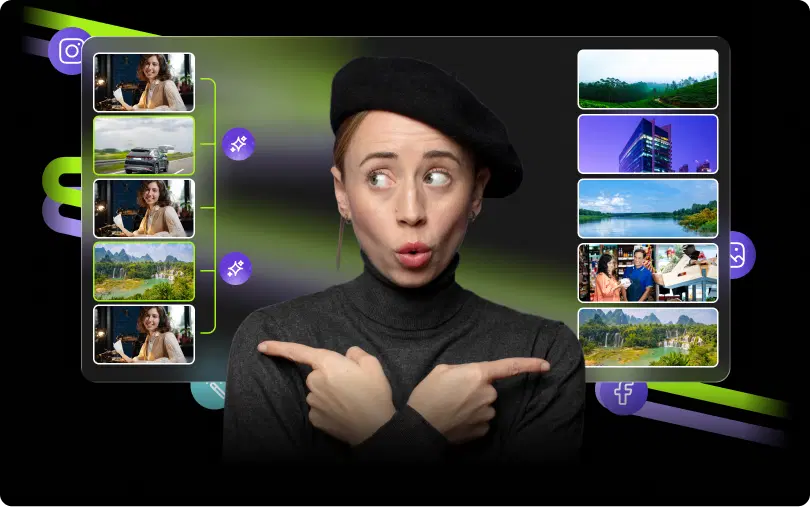
In today's fast-moving digital world, visuals are the key factor. As a content creator, marketer, or even a business, deciding between using an AI B-roll generator and traditional stock footage is what can affect the creativity and success of your video content, whether it's a brand video, an ad, or even a simple promotional video for your social media channels. When do you really need what? Should you rely on traditional stock footage or leverage AI capabilities, such as VFX AI? It's not an either-or situation; it's about making the right call between the two.
Understanding the Fundamentals
Before comparing the two, let's first understand the purpose and importance of B-roll in creating your final video content. B-roll is meant to complement your main storyline and provide context and breathing room between scenes and dialogue. It bridges the gap between dialogue and action, enhances emotional impact, and gives editors creative flexibility in post-production.
The big question is not about overall superiority. It's about which option provides you the best value for your particular situation.
When AI B-roll generation are effective when:
- Precision is everything: Need a particular object, style, and/or scene that cannot be obtained from standard stock footage? With AI, you can now generate unique visuals according to your needs.
- Tight budgets: Creating custom content is expensive. With AI, you can now create high-quality clips in no time and for little to no budget.
- Going beyond reality: Want to include fantastical elements, ideas, and/or scenes that cannot be obtained in real life? With AI, the possibilities are endless.
Stock Footage shines when:
- Authenticity is key: Real people in real places and situations can sometimes express emotions in the most authentic and organic manner, which is hard to replicate with AI.
- Need to show specific locations: If you are required to show distinct, specific locations, using pre-shot stock footage is the best option.
- Complex Human Actions: Human movement, interaction, and emotion remain a challenge for AI. Stock footage wins here.
Also Read: 10 Best AI Video Editing Software for Beginners in 2026
The Cost-Efficiency Framework
Stock Footage is the clear winner in most cases, as it is easier and faster to obtain and use than AI-generated videos. For instance, it typically takes an editor 5–10 minutes to locate and use a video from a premium stock video library. With unlimited subscription options, the extra cost is virtually nothing, making stock footage the best option for general purposes, such as "a person walking in a park."
AI B-roll generation is therefore viable for very specific or recurring requirements. If you want a shot like "a futuristic lab scene with purple lighting and specific hexagonal windows," you will not find it in stock libraries. Custom shooting for that shot would cost you in thousands. AI would deliver that in about 20 minutes with minimal AI tools costs or credits.
When to Use AI B-Roll
Creators, startups, agencies or anyone should use AI B-roll generation when they want/have:
- Unique Brand Identity: If you need brand visuals that truly make you stand out from the crowd, then AI B-roll is for you. Create shots/scenes that perfectly match your brand identity and the aesthetics.
- Budget Constraints: If you are a startup or a small business, then AI B-roll offers you affordable solutions. No more expensive premium stock footage license fees. Make unlimited variations at a limited cost.
- Specific Scenarios: If you want a purple elephant walking through Times Square, then AI makes it possible. If you have a creative vision that is beyond stock library offerings, then AI B-roll is for you.
- Rapid Prototyping: If you are in the conceptual stage, then AI B-roll is for you. Experiment with different ideas and visual approaches without spending money on expensive stock footage.
When to Use Stock Footage
Any business, agency, or individual should use stock footage only when it is truly required. The instances include:
- Authenticity: Documentaries, news programs, and educational videos often require authentic, real-life footage. Stock footage selections offer human connections, authentic environments, and genuine interactions.
- Time constraints: When deadlines are tight, stock footage offers instant solutions. You get to search, select, and download in no time, without having to wait for any additional rendering or generation times.
- High-end production requirements: The very best of stock footage clips, shot with high-end equipment, guarantee high-end production values. In critical corporate presentations or important marketing campaigns, this is invaluable.
- Legal Compliance: Stock footage comes with clear legal guidelines that provide commercial productions with robust legal protection.
Also Check: VFX AI Clip Maker
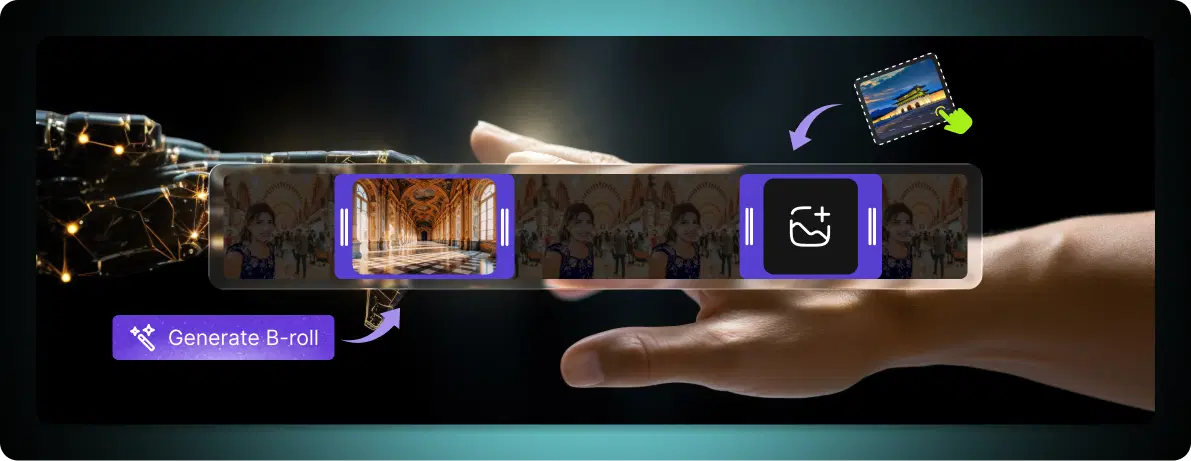
When to Use a Hybrid Approach
Companies or any professionals should use the hybrid approach when:
- A 20–40% B-roll ratio is good enough to be applied in any professional video production. It provides visual interest and smooth transitions without overwhelming your primary narrative.
- Stock footage is well-suited to generic requirements, such as scenes depicting complex human interactions.
- AI-generated B-roll footage is suitable for recurring and brand-related requirements, as well as for scenes that require a good environment.
- Quality always comes first over deadlines. A proper QA process will protect your brand far more than any effort to beat deadlines.
Quality and Authenticity Considerations
The Trust Factor Always Counts. Stock video, when deployed in B2B video messages, carries an expected level of authenticity. Stock video can look generic, but it's exactly what the audience expects from corporate video.
AI output must pass rigorous quality-control hurdles. Visible artifacts, flickering backgrounds, or impossible physics can evoke the Uncanny Valley Effect and weaken brand credibility.
Conduct the 5-Minute Mechanical Audit for AI B-Roll
The 5-minute mechanical AI B-roll audit involves:
- Motion Consistency Check: Does the subject's geometry hold consistent shape, avoiding the creeping effect of "visual melting"?
- Artifact Scan: Look for flickers or physics inconsistencies in the shadows.
- Resolution Check: Is the output sharpness consistent with the platform you're delivering on?
- License Verification: Does the AI subscription you're using come with full commercial rights for the region you're distributing from?
Also Read: The Ultimate Guide to AI Video Repurposing for 2026
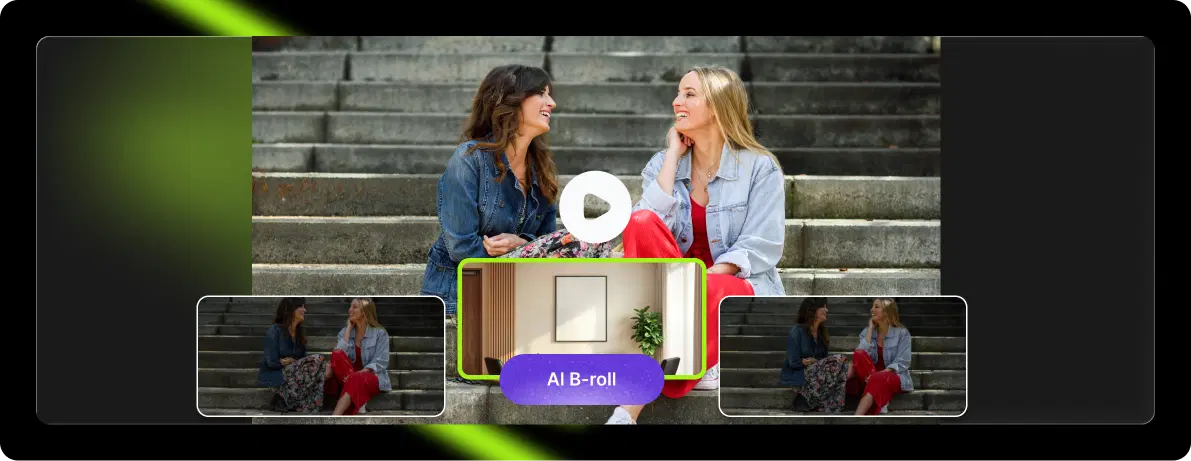
Optimizing AI B-Roll Quality
Use AI prompts that incorporate motion language; use cinematic terms such as "slow pan" or "dolly zoom." Use solid references for images to ensure consistency. Avoid demanding complex human interactions; instead, leverage AI's strength in environmental and abstract shots.
Key Considerations for Your Decision
Below are a few factors that one should consider while deciding between the 2 of them:
- Budget Overview:Stock Footage: High upfront cost, with predictable expenses.AI B-roll: Lower per-clip cost, with tool subscriptions.
- Time Commitment:Stock Footage: Ready to use immediately.AI B-roll: Requires time to generate, with possible back-and-forth iterations.
- Creative Control:Stock Footage: Limited by what is available.AI B-roll: Endless possibilities for customization.
- Quality Consistency:Stock Footage: High quality, with reliability.AI B-roll: Quality is up to the tool, or your prompt skills.
Future Trends
The development of AI technology will bring us:
- More photorealistic AI-generated images/videos
- Increased integration of AI-generated media with traditional media
- New licensing structures for AI-generated media
- Increased customization capabilities
Conclusion
The choice between an AI B-roll generator and stock footage is a strategic one. Successful creators understand that each has its own strengths. Stock Footage provides legitimacy, while AI B-roll offers customization and cost savings.
By understanding your project's specifics like budget, creativity required, timeline, and all, you can make decisions that will maximize your project's effectiveness. The future of video content is not about choosing one or the other, but using both to create compelling stories that stand out.