Introduction
But something is about to change. This revolution is not being fueled by larger cameras or more powerful lights. Instead, it is being driven by intelligent algorithms. Artificial intelligence is systematically knocking down the old barriers and redefining what “quality” really means.
This blog outlines the impact of AI on video production and how it is empowering individual creators and teams to make content that competes on equal terms with, and in some cases is better than, what was once possible with huge budgets and resources.
What 'Production Quality' Meant Before AI
Traditionally, high production quality was directly correlated to your budget. It meant:
Expensive Equipment: Top-of-the-line equipment like ARRI or RED cameras, high-end lenses, lighting equipment, and professional audio equipment for capturing high-quality sound.
Large Crews: A small army of specialists was a non-negotiable requirement. From your Director of Photography to your lighting and sound crew, your makeup artist, colorist, and even your Visual Effects crew all had a part to play.
Time-Intensive Workflows: Post-production was laborious. Rotoscoping your seconds of footage would take days. Color grading was an art form best left to professionals.
These barriers to entry for filmmaking and Visual Effects were high. Your creative vision was directly correlated to your bank account. For a single creator, this level of production quality was a near-impossible dream, and for a small team, it was a compromise on your creative vision.
The AI Shift: Redefining Production Standards
AI in video production is no longer hype; it is demolition. Production tools are no longer just about speed, scalability, and cost efficiency. A solo creator is now producing cinematic scenes in minutes, rivaling $1M productions.
Data backs it . AI video tools manages 80% of routine video production tasks in 2026. This reduces costs by 70-90% and increases productivity 10 times. The democratization of AI video tools is empowering solo content creators. Gone are the days when producing content was considered incompetent. Production tools for small teams are empowering lean operations, where quality = smart automation, not headcount.
Also Read: Best Free AI Tools to Edit Videos Automatically in 2026
Key AI Technologies Transforming Production Quality
While AI is no longer just one technology, it is rather an assortment of specialized technologies.
AI Video Editing and Automation
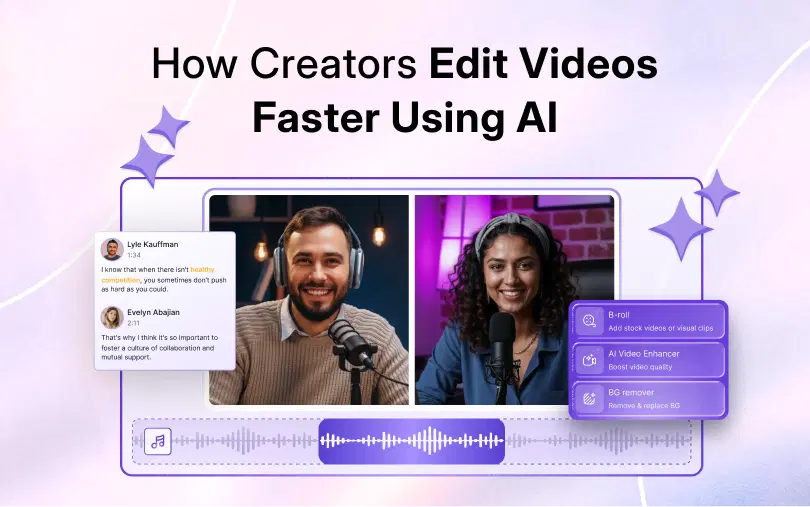
Tedious editing tasks that previously took hours can now be automated. For instance, automated video editing tools can scan through hours of video content, select the best takes, and perform smart jump cuts, including making a rough cut from a script. Other advancements in video editing tools include:
Auto Color Grading: With AI, a video editor can now review a scene and apply a professional color grade, including matching color across shots and lighting conditions.
Automated Sound Sync: The process of syncing audio from various sources, a process that has been a post-production challenge, can now be done with just one click.
Smart Reframing: Tools now smart reframe horizontal videos, such as those meant for TikTok or Reels, to keep the main subject in view.
Generative AI for Assets and Scenes
This is where AI filmmaking gets really futuristic. Text-to-image and text-to-video models are rapidly maturing, allowing creators to produce content that was previously impossible without a team of 3D modelers or a massive budget.
Generative Backgrounds: Want to film a sweeping sci-fi city or a fantasy forest? AI can generate an endless variety of high-resolution backplates and virtual sets.
Custom Assets: Want to generate props, textures, or even character ideas from simple text prompts? AI can speed up pre-production and asset creation.
Script-to-Video Pipelines: New platforms are emerging that can generate entire video sequences from a script, producing storyboard-like visuals or even basic animated scenes. OpenAI's Sora is an exciting example of the tremendous potential in this space.
Next-Generation AI VFX Tools
The VFX industry is being supercharged by the advent of AI VFX tools. Tasks that were once done manually with so much pain can now be completed in an incredibly short time.
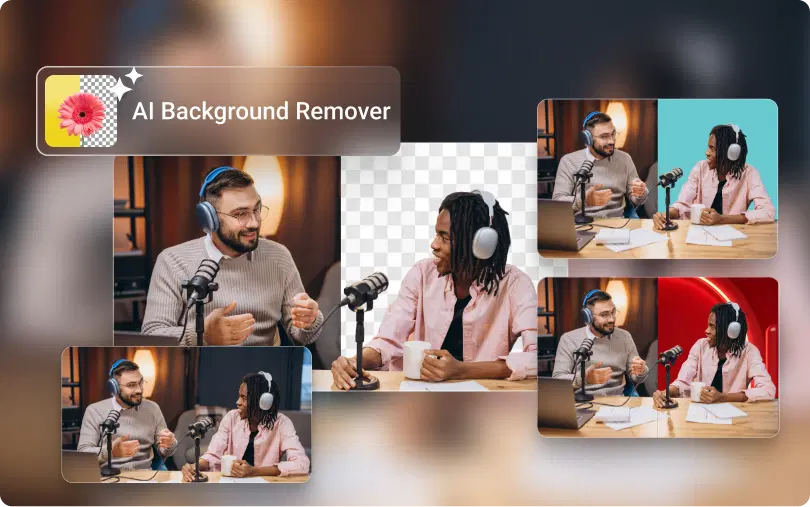
AI Rotoscoping & Masking: Subjects can be separated from the background in near-perfect accuracy in a fraction of the time it would take to do it manually.
Intelligent Motion Tracking: AI can track objects or subjects within the frame with unparalleled stability, enabling seamless digital compositing.
AI-Enhanced Compositing: AI tools can assist with compositing tasks, including green screen, shadow generation, and more, making the creation of complex shots more accessible.
Voice AI, Dubbing, and Sound Design
High-quality audio is half the battle. AI has entered the world of sound, allowing creators to clone their voices, audio enhance, make corrections, or create voices in other languages, making global distribution a reality, even for solo content creators. AI can also master audio, remove background noise, and even generate contextual sound effects.
Also Check: Clean Up SpeechBenefits for Solo Creators: The One-Person Studio
What does this mean for the individual creator? This is nothing short of a revolution.
Faster Turnaround: Tired of spending more time on tedious work than on the creative part? Automate these tasks and get back to what you do best. What used to take a week to do now takes just one day.
Reduced Dependency: You don't have to be good at everything. AI is your virtual colorist, sound designer, and VFX assistant.
Massive Cost Savings: No need to buy expensive software plugins, stock footage licenses, or hire freelancers to get the job done.
Creative Freedom: Being able to play with ideas without consequence is a superpower. Want to try out that crazy VFX idea? Want to make ten different backgrounds for one scene? No problem. You have the freedom to test it all using VFX AI.
How Small Teams Are Competing with Studios
Small-team production tools enable studio rivals to produce outputs through lean production.
Case Example 1: An agency in the USA uses VFX AI for smart reframing and Kling for long-form content, producing a festival short film that matches A24 quality in 2 weeks, competing with studios, inspired by 2026 creator stacks.
Case Example 2: Marketing team uses VFX AI's highlight tools and Editor and Veo’s audio for ad campaign production; 10 times faster than agencies, according to 2026 trends.
These teams beat studios, competing through lean production.
Pro Tip: The creators getting the best results aren’t the ones relying fully on AI; they’re the ones directing it. Think of AI as your production accelerator, not your creative brain. The more intentional your inputs (scripts, references, prompts), the more professional and distinctive your output will be.
Challenges and Limitations
Of course, the path forward isn’t without its challenges.
Quality Inconsistencies: Output quality can be inconsistent, a phenomenon usually known as the "AI uncanny valley." This can include the creation of artifacts, unnatural movement, or just plain weirdness.
Over-Reliance & Homogenization: If all creators use the same AI models and similar prompts, we risk a future of aesthetically similar, soulless content. The creator’s vision is what’s most important.
Ethical Concerns: The rise of realistic deepfakes, copyright issues, and the question of what constitutes originality are all very real challenges the industry faces.
Future of AI in Production Quality
By 2028, hyper-personalized content will be a reality, with AI-generated videos tailored to each and every viewer. Real-time production pipelines via edge computing. AI is no longer just a tool for content creation; AI is a co-creator, suggesting shots and improving scripts.
The very meaning of "production quality" is being rewritten. It is no longer a measure of how much you are willing to spend, the number of people on your crew, or the brand name on your camera. Today, production quality is a measure of your creative genius, your vision, and your ability to strategically use AI to get the job done.
For solo creators and small teams, this is the time to shine. The doors are thrown wide open. The tools to bring your wildest dreams to reality are available to you like never before. The question is no longer "can I make studio-quality content?" but "what is the masterpiece that you are going to make with this new power?"