Introduction
The good news? Building a personal brand as a content creator has never been more achievable, the strategies are proven, and AI content creation tools have collapsed the production work. This guide walks through exactly how to do it. Whether you're just starting or looking to scale an existing audience, the right branding approach helps turn casual viewers into loyal followers. By combining a clear identity with consistent content, you can grow faster across every platform.
What Is Personal Branding for Creators?
Personal branding is the deliberate practice of shaping how your audience perceives you: what you stand for, what you're known for, and why someone should follow you over anyone else in your niche.
Four terms people often blur together:
| Term | What it means | Primary goal |
|---|---|---|
| Personal brand | Your reputation, positioning, and identity | Recognition and trust |
| Creator | Someone who publishes content regularly | Audience and output |
| Influencer | A creator monetizing reach via sponsorships | Attention and deals |
| Business | A structured entity selling products/services | Revenue and systems |
You can be all four, but the personal brand is the foundation that makes your audience across platforms, algorithms, and trends.
Why Personal Branding Matters More in 2026
Three shifts made content creator branding non-negotiable this year:
- The AI content explosion. Generic content is now infinite and free. Your perspective, story, and face are the only assets that can't be replicated.
- Trust is the new reach. Audiences follow people, not channels. A strong brand converts casual viewers into a community that shows up regardless of the algorithm.
- Creator monetization depends on it. Brand deals, courses, memberships, and consulting all price on trust and recognition, not follower counts.
In short: content gets you discovered. Brand gets you remembered.
Also Read: Trending Caption Styles for 2026
How Do You Build a Personal Brand in 2026? A Step-by-Step Guide
The sequence that works for YouTubers, coaches, podcasters, and SaaS founders alike.
- Choose a niche (then narrow it again)
"Fitness" is a category. "Strength training for desk workers over 40" is a niche. Specificity makes you the obvious choice for a specific person, it's how beginners build an audience online without a budget. - Find your positioning
Answer one question: why you? Positioning lives at the intersection of your skill, your story, and an underserved audience. - Develop a distinct voice
Your voice lets people recognize you in three seconds. Decide on your tone (contrarian? warm? analytical?), recurring phrases, and point of view, then keep it consistent everywhere. - Define 3–5 content pillars
Content pillars are the recurring themes you'll be known for, they keep your feed coherent and planning fast. Example for a design creator:- Portfolio and career advice
- Design process breakdowns
- Tool tutorials
- Industry commentary
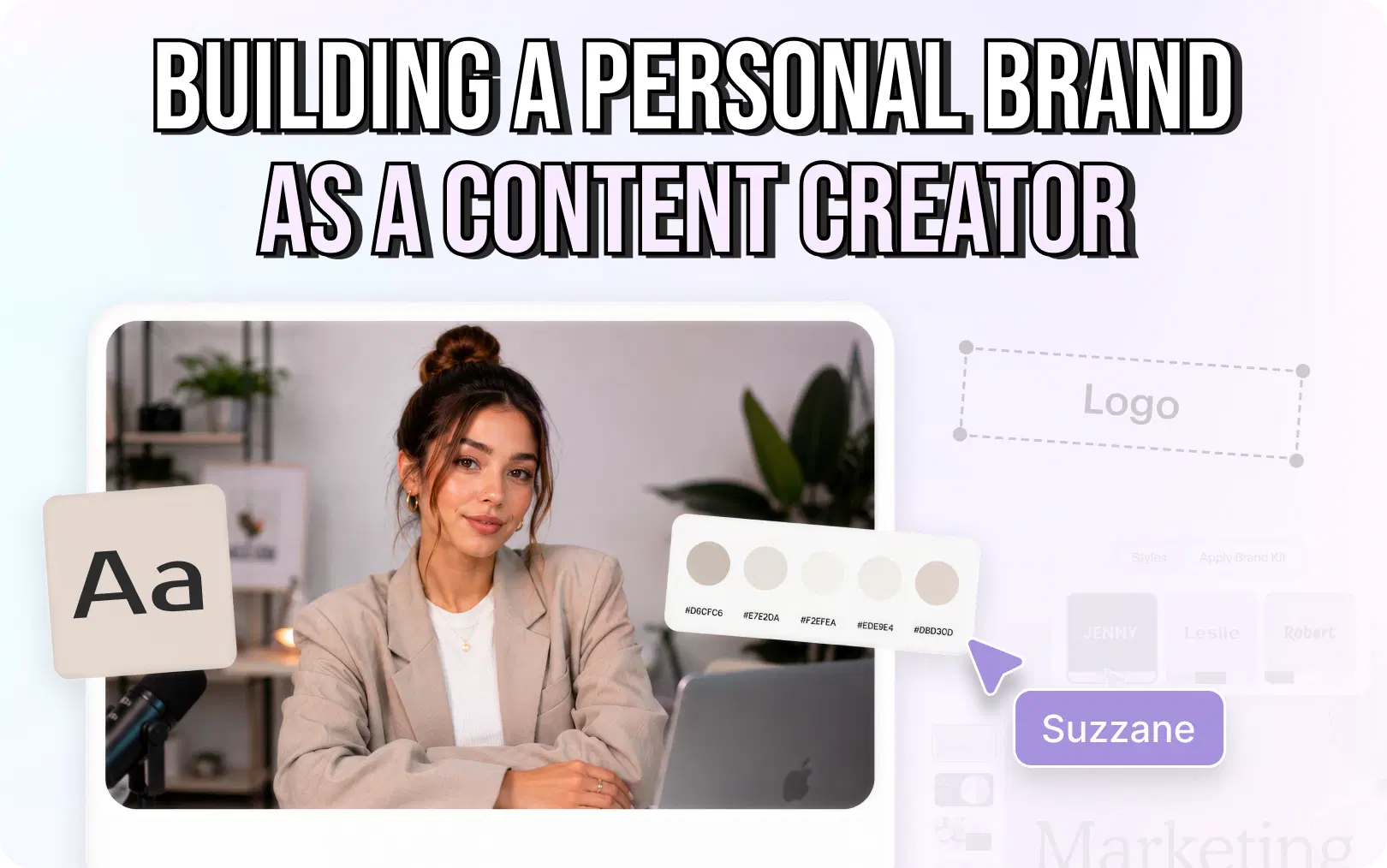
- Build a simple visual identity
Consistent colors, thumbnail style, caption fonts, and framing, viewers should recognize your content before they read your name. - Post consistently (and sustainably)
How often should creators post? At the highest frequency you can sustain for a year. For most creators in 2026, that's one long-form video per week plus three to five repurposed short clips. Consistency beats intensity. - Engage like a human
Reply to comments in the first hour after posting, ask questions in your content, and show up in other creators' communities. Engagement is how algorithms and people decide you're worth recommending. - Build owned assets early
Email list: the only audience no algorithm can take away
Website: home base for SEO, credibility, and creator monetization
Community: Discord, Circle, or a membership, where superfans concentrate - Practice thought leadership
Building authority online means publishing opinions, frameworks, and lessons, not just tips. Explain why things work. Authority compounds when you're willing to have a take.
Actionable takeaway: Write one sentence each for your niche, positioning, and three pillars. If you can't, that's this week's work: before you film anything.
Also Read: The 30-Day Content Calendar: How to Publish Clips Daily Using AI
Why Video Dominates Personal Branding
Video is the fastest trust-builder available; face, voice, and delivery communicate credibility in ways text can't. That's why every serious personal brand marketing strategy in 2026 is video-first:
- YouTube: depth and searchable authority; long-form is where trust compounds
- Instagram Reels: reach and relatability
- TikTok: the fastest discovery engine for new audiences
- LinkedIn video: underpriced attention for coaches, consultants, and B2B creators
Why is short-form content so important?
Short-form video is the discovery layer of the creator economy. Shorts, Reels, and TikToks are how strangers find you; long-form and email are how they come to trust you. A smart short-form video strategy treats every clip as a doorway into deeper content.
The repurposing strategy that top creators use
The highest-leverage move in any content creation workflow is video repurposing: film one strong long-form video, then extract 5–10 short clips for YouTube Shorts, Reels, and TikTok. One recording session fuels an entire week across four platforms.
How AI Makes Personal Branding Easier
Most creators don't fail at strategy. They fail at production. Editing, captioning, clipping, B-roll, resizing for each platform; it's hours per video, and it's exactly where consistency dies.
This is where an AI video editor changes the math. Tools like VFX AI handle the repetitive production work so you can focus on what only you can do: ideas, delivery, community:
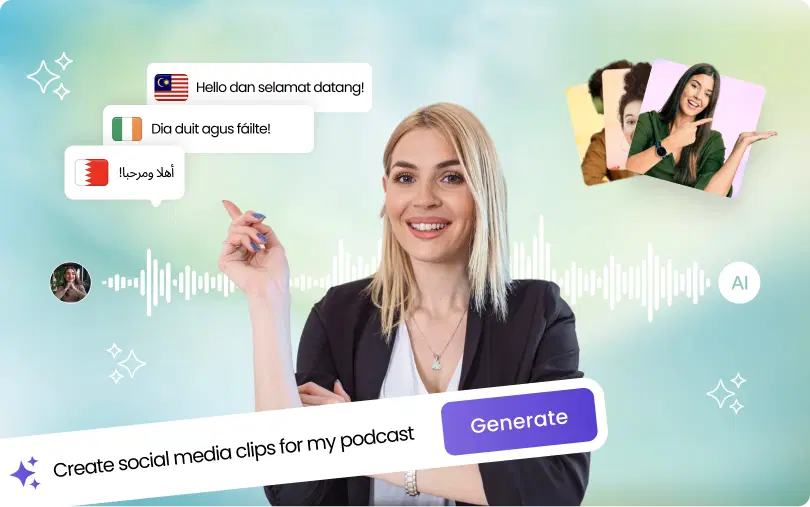
Automatic clip detection: an AI clip generator scans your long video and finds the moments most likely to perform as shorts
AI reel generator: Using AI clip maker turns those moments into ready-to-post vertical clips
AI captions and subtitles: accurate, styled captions in minutes using auto caption generator; critical since most short-form video is watched on mute
B-roll generation: adds visual movement that holds attention using instant B-rolls
Multi-platform export: sized and optimized for YouTube Shorts, Reels, and TikTok
Instead of spending hours editing every upload, creators using AI video editing software ship the same content in a fraction of the time, and consistency is the biggest predictor of growth. In 2026, creator workflow automation is baseline infrastructure, not a luxury.
The Daily Workflow of Successful Creators
A practical workflow from idea to publish, with AI doing the heavy lifting:
| Day | Task | Time |
|---|---|---|
| Mon | Research ideas, write outline/script | 2 hrs |
| Tue | Film one long-form video | 1–2 hrs |
| Wed | Upload to VFX AI → auto-generate clips, captions, B-roll | 30–45 min review |
| Thu | Schedule shorts across YouTube, Reels, TikTok | 30 min |
| Fri | Publish long-form; write newsletter from the same material | 1 hr |
| Daily | Engage with comments and community | 20–30 min |
Notice the ratio: one filming session, one editing review, a full week of AI social media content. The workflow scales, not the hours.
Also Read: Best AI Video Editor for YouTube in 2026
Common Personal Branding Mistakes
Avoid the mistakes that most creators make:
- Copying trends instead of building identity: trends give views, not fans
- No niche: talking to everyone resonates with no one
- Inconsistent posting: the algorithm forgets you faster than your audience does
- Weak storytelling: facts inform; stories get remembered and shared
- Ignoring SEO: video and website SEO are free discovery left on the table
- No email list: renting your whole audience from platforms is fragile
- No video strategy: text-only brands grow slower in 2026
- No repurposing: publishing once wastes most of every video's value
- Letting editing eat your week: fix the workflow before you fix the content
The Future of Creator Branding
A few trends worth building for:
- Search-everywhere optimization: audiences search TikTok, YouTube, and AI assistants, not just Google. Optimize titles, captions, and transcripts for all of them.
- Video SEO grows in weight: accurately captioned, well-structured video is increasingly indexable.
- Authenticity: as AI content floods feeds, verifiably human perspective becomes the premium product.
- Creator-owned platforms: newsletters, communities, and products keep shifting power to creators.
The pattern: platforms change, but a trusted personal brand transfers.
Building a personal brand as a content creator in 2026 comes down to a simple formula: a sharp niche, a consistent voice, a video-first content engine, and owned channels that compound. None of it requires rare talent; it requires a sustainable workflow.
If you're creating content every week, the fastest upgrade isn't a new strategy it's removing the production bottleneck. Let an AI video editor like VFX AI handle clipping, captions, and repurposing, and reinvest those hours into the one thing no tool can do: being you, consistently, in public.